| LUTEIN: Another carotenoid that does not convert to vitamin a in the body but is an impressive antioxidant. Especially helpful in protecting the eyes, lutein has been found to clear away free radicals caused by harmful ultraviolet rays and retard macular degeneration, the most common cause of blindness in people sixty-five and over.
Food and Supplement Advice: Lutein is abundant in spinach and collard greens, so if you eat plenty of those daily you probably do not need a supplement. |
| If it has a sticky, goopy substance on the end, your pet might need more vitamin a. Check with your vet.)
VITAMIN E
This antioxidant vitamin has a strong influence on the immune system, and offers pets protection against environmental pollutants and toxins. (This is especially important for animals living in cities.) Dogs under stress or larger breeds that are more susceptible to heart disease would benefit from vitamin E supplements. Vitamin E can help protect cats from steatitis, a condition caused by all-fish diets, which deplete this important vitamin. |
| A deficiency of vitamin a can lead to loss of vitamin C.
• Large doses of vitarnin A may cause birth defects, particularly if taken in the first trimester, and should be avoided by pregnant women. Use beta-carotene instead.
• An oversupply of vitamin B1 (thiamine) can affect thyroid and insulin production and might cause B6 deficiency, as well as loss of other B vitamins.
• Prolonged ingestion of any B vitamin can result in significant depletion of the others.
• Pregnant women should check with their doctors before taking sustained doses of over 50 mg. of vitamin B6 (pyridoxine). |
| ZINC
This top-notch mineral, which works best with adequate amounts of calcium, phosphorus, and vitamin a, is crucial for the production of enzymes. Zinc supports the immune system, aids in wound healing and removing toxins from the body, helps protect against cancer, and is necessary for your pet's healthy coat, skin, and nails. Dogs and cats get dietary zinc in lamb, pork, beef, liver, brewer's yeast, and beans. If your cat's diet is high in soy meal (check labels), more zinc might be called for in your animal's diet.
Recommended daily doses are:
• For adult dogs: Zinc, 10-30 mg. |
Earl Mindell, R.Ph., Ph.D.
See book keywords and concepts |
 High doses of vitamin a can cause birth defects, so it should never be used by pregnant women.)
Vitamin C—As early as 1954, a researcher gave large doses of vitamin C to fifty-three acne patients; forty-three improved on an 8-ounce glass of citrus juice served twice daily and 3,000 mg of vitamin C. Today, we know that vitamin C is essential for the formation of collagen, the stuff that binds together the cells of connective tissue; it is also essential for the maintenance of healthy skin.
Minerals
Zinc and selenium—Pimples can easily become infected, which can cause both pain and scarring. High doses of vitamin a can cause birth defects, so it should never be used by pregnant women.)
Vitamin C—As early as 1954, a researcher gave large doses of vitamin C to fifty-three acne patients; forty-three improved on an 8-ounce glass of citrus juice served twice daily and 3,000 mg of vitamin C. Today, we know that vitamin C is essential for the formation of collagen, the stuff that binds together the cells of connective tissue; it is also essential for the maintenance of healthy skin.
Minerals
Zinc and selenium—Pimples can easily become infected, which can cause both pain and scarring. |
Dr. Mary Dan Eades
See book keywords and concepts |
 Recommendation: Eat foods rich in vitamin a and beta-carotene, and supplement your diet with 25,000 IU (15 mg) of beta-carotene per day.
• In its role as a powerful antioxidant, vitamin C helps to protect the retinal tissues from aging. However, one study has shown that excessive supplementation of vitamin C plus excessive exposure to high-energy light (ultraviolet light) in nearsighted people who don't correct their nearsightedness with glasses or contact lenses may accelerate the development of macular degeneration. Recommendation: Eat foods rich in vitamin a and beta-carotene, and supplement your diet with 25,000 IU (15 mg) of beta-carotene per day.
• In its role as a powerful antioxidant, vitamin C helps to protect the retinal tissues from aging. However, one study has shown that excessive supplementation of vitamin C plus excessive exposure to high-energy light (ultraviolet light) in nearsighted people who don't correct their nearsightedness with glasses or contact lenses may accelerate the development of macular degeneration. |
John Heinerman
See book keywords and concepts |
 If we want a vitamin a or C, iron, or potassium supplement, we can just visit any local health food store or nutrition center in our city and buy what we need. Such a convenience isn't found so easily elsewhere. Consequently, people must rely upon the foods they eat to obtain the nutrients their systems require.
Purslane has long been used as a foodstuff in Asia and the Middle East. It is incredibly rich in vitamin C (700 mg. If we want a vitamin a or C, iron, or potassium supplement, we can just visit any local health food store or nutrition center in our city and buy what we need. Such a convenience isn't found so easily elsewhere. Consequently, people must rely upon the foods they eat to obtain the nutrients their systems require.
Purslane has long been used as a foodstuff in Asia and the Middle East. It is incredibly rich in vitamin C (700 mg. |
Dr. Mary Dan Eades
See book keywords and concepts |
| With an injury, however, I would recommend that you take vitamin a in a dose of 10,000 IU per day for approximately 1 week, then switch to beta-carotene in a daily dose of 25,000 IU.
• Your body must have vitamin C to hook the subunits of collagen, the chief protein of fibrous repair tissue, tightly together. Deficiency of vitamin C leads to weak collagen that more easily tears and breaks down. Refer to the discussion of this important vitamin in the A-to-Z Nutrient listings as well as to Scurvy, its deficiency disease, for more information about vitamin C's role in building strong tissues. |
John Heinerman
See book keywords and concepts |
| Strengthens Eyes in Night Blindness
The late plant forager, Euell Gibbons, asserted that " yellow dock greens are richer in vitamin a than carrots are." He believed that by eating many helpings of these greens, one could definitely improve his or her night vision, particularly if it had become somewhat dim with age.
Gibbons' Greens
Gibbons stated that the best time for collecting dock greens was either in the early spring or the late winter just after the first or second frost. |
Earl Mindell, R.Ph., Ph.D.
See book keywords and concepts |
| Vegetables rich in vitamin a include squash and sweet potatoes. Carrots and winter squash are excellent sources of betacarotene. One raw carrot contains 13,500 1U of betacarotene—more than 250 percent of the RDA. Winter squash is not only rich in betacarotene, it has an extra bonus: It's rich in potassium and it is chock full of vitamin C.
Keeping diabetes under control is critical. Diabetes can increase the risk of developing cataracts by more than 400 percent in people under the age of 65. (See "Diabetes," page 111. |
John Heinerman
See book keywords and concepts |
 Strengthens Eyes in Might Blindness
The late plant forager, Euell Gibbons, asserted that "yellow dock greens are richer in vitamin a than carrots are." He believed that by eating many helpings of these greens, one could definitely improve his or her night vision, particularly if it had become somewhat dim with age. Strengthens Eyes in Might Blindness
The late plant forager, Euell Gibbons, asserted that "yellow dock greens are richer in vitamin a than carrots are." He believed that by eating many helpings of these greens, one could definitely improve his or her night vision, particularly if it had become somewhat dim with age. |
Dr. Mary Dan Eades
See book keywords and concepts |
| Recommendation: Increase your consumption of dark green leafy vegetables and yellow-orange vegetables rich in this vitamin a relative. You can also take 25,000 IU of supplemental beta-carotene per day.
• Acidophilus reduces allergic reactions. Recommendation: Take 2 capsules 3 times daily with meals.
• Vitamin Bl2 prevents nerve damage and promotes normal skin growth. Recommendation: Take 2000 micrograms daily. Use an under-the-tongue form.
• Niacin helps to prevent the release of histamine from immune defenders controlling your allergic response. |
John Heinerman
See book keywords and concepts |
| An Old Amish Herbs remedy called Super C has cayenne, ginger and vitamin a in with vitamin C to make it more potent (see Appendix).
Keeping Your Toes Warm in Winter
Cayenne pepper sprinkled in your socks keeps your feet warm in winter. I know an old duck hunter from Malad, Idaho who always put some cayenne in the bottoms of his woolen socks and also into the fingertips of his mittens or gloves, when staying out in the cold behind a duck blind for long periods of time. |
| For one thing, they contain about as much vitamin a as 1/4 tsp. of cod-liver oil does. For another, they yield about two-thirds of the vitamin C that an entire orange does! Furthermore, parsley ranks higher than most vegetables in an important amino acid, histidine, which strongly inhibits tumor development within the body, according to Mutation Research (77:245-50). And vitamins A and C are now recognized as significant nutrients in the fight against cancer. Therefore, it seems we'd all be better off eating more parsley than just leaving it on our plates. |
The Life Extension Editorial Staff
See book keywords and concepts |
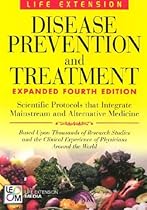 A (retinol) were telated to regression of cervical dysplasia, especially in HPV-16-positive women. Nagata et al. (1999a) conducted a follow-up study in 134 women who had been histologically diagnosed with cervical dysplasia (from October 1987 to September 1988). Follow-up with the women was continued until February 1995. Every 3 months, the women were examined with cervical smears and colposcopy (a visual examination of the cervix and vagina using a lighted instrument). During follow-up, 8 women (5.9%) developed cancer in situ or invasive cervical cancer and 106 (79.1%) reverted to normal. A (retinol) were telated to regression of cervical dysplasia, especially in HPV-16-positive women. Nagata et al. (1999a) conducted a follow-up study in 134 women who had been histologically diagnosed with cervical dysplasia (from October 1987 to September 1988). Follow-up with the women was continued until February 1995. Every 3 months, the women were examined with cervical smears and colposcopy (a visual examination of the cervix and vagina using a lighted instrument). During follow-up, 8 women (5.9%) developed cancer in situ or invasive cervical cancer and 106 (79.1%) reverted to normal. |
| A or beta-carotene intake. Therefore, adding supplements and nutrients (e.g., vitamins, minerals, folic acid, indole-3-carbinol) as a daily part of healthy diet should be carefully considered (see the section on Integrated Natural Therapy for Cervical Dysplasia for a discussion of beneficial supplements).
Stress
Stress and a feeling of hopelessness have been implicated as having an adverse effect on immunity. Clinical researchers reported that stress contributed to the promotion of CIN and squamous cell cervical cancer (Goodkin et al. 1987). |
| A, thiamine, vitamin C, bioflavonoids, grape-seed-skin extract, vitamin E, and bilberry, which could benefit ocular health. Some individuals may wish to emphasize additional amounts of the most beneficial of these herbs and nuttients, regarding glaucoma management.
6. Use vitamin C crystals or a powdered form of vitamin C, buffered with magnesium. (This type is added to a liquid and is considered highly absorbable.) The buffered form of vitamin C is easier on the stomach when large amounts of ascorbate are ingested. |
Muhammed Majeed, Ph.D. Vladimir Badmaev, M.D., Ph.D. Uma Shivakumar, Ph.D. R. Rajendran, M.S.
See book keywords and concepts |
| Where would we be if we stopped with vitamin a and vitamin B in 1915? Today we recognize 11 vitamins that are dietary essentials, and several more vitamin-like nutrients. For optimal health, we also need antioxidant nutrients and accessory factors such as carotenoids, bioflavonoids and lipoic acid. Foods contain thousands of beneficial compounds, and we should take advantage of those that will help us live better and longer.
There are three good reasons for having several antioxidant nutrients. Antioxidant nutrients work together synergistically. |
Gary Null
See book keywords and concepts |
 Bet you didn't know that vitamin a is in the recipe, too, especially for women in the postmenopausal stage, who often show signs of osteoporosis (fragile bones) due to calcium loss.
According to the book Understanding Nutrition by Whitney and Hamilton, "Some of the cells involved in bone formation are packed with sacs of degradative enzymes which can take apart the structures from which bone is made. Bet you didn't know that vitamin a is in the recipe, too, especially for women in the postmenopausal stage, who often show signs of osteoporosis (fragile bones) due to calcium loss.
According to the book Understanding Nutrition by Whitney and Hamilton, "Some of the cells involved in bone formation are packed with sacs of degradative enzymes which can take apart the structures from which bone is made. |
Dr. Mary Dan Eades
See book keywords and concepts |
| If you cannot find such a chelated iron supplement, you may take 90 mg ferrous sulfate twice daily along with 500 mg time-release vitamin C, which will help you absorb the iron.
• vitamin a is a potent free radical scavenger that aids in vaginal healing. Recommendation: Take 50,000 IU daily. Warning: Do not exceed 8000 IU daily if you are pregnant.
• Yeast infection can lead to vitamin B deficiency. Recommendation: Take 100 mg of a yeast-free formula daily.
• When your body is fighting infection, you need extra amounts of vitamin D, calcium, and magnesium. |
Mark Stengler, N.D.
See book keywords and concepts |
 High dosages of fat-soluble vitamins like vitamin a can cause side effects, especially if one has liver or kidney disease.
SPECIFIC RECOMMENDATIONS FOR SPECIFIC PEOPLE
In addition to a full-spectrum multivitamin, I recommend the following antioxidants so that the daily total (taking into account what is in the multivitamin) equals the recommended dosage.
^ Athletes
These supplements are recommended to help athletes recover more quickly from training. Studies have shown that vitamins C and E help to reduce muscle soreness after physical activity. High dosages of fat-soluble vitamins like vitamin a can cause side effects, especially if one has liver or kidney disease.
SPECIFIC RECOMMENDATIONS FOR SPECIFIC PEOPLE
In addition to a full-spectrum multivitamin, I recommend the following antioxidants so that the daily total (taking into account what is in the multivitamin) equals the recommended dosage.
^ Athletes
These supplements are recommended to help athletes recover more quickly from training. Studies have shown that vitamins C and E help to reduce muscle soreness after physical activity. |
Michael Castleman
See book keywords and concepts |
 I take a daily multivitamin/mineral supplement containing 5,000 international units of vitamin a, 50,000 international units of beta-carotene, 50 milligrams of the B vitamins (except for 1,000 milligrams of niacin), 3,000 milligrams of vitamin C, 400 international units of vitamins D and E, 1,000 milligrams of calcium, 150 micrograms of iodine, 25 milligrams of iron, 500 milligrams of magnesium, 25 milligrams of manganese, 200 micrograms of selenium and 50 milligrams of zinc." diseases we're dying of today. The research is there, and it's compelling. I take a daily multivitamin/mineral supplement containing 5,000 international units of vitamin a, 50,000 international units of beta-carotene, 50 milligrams of the B vitamins (except for 1,000 milligrams of niacin), 3,000 milligrams of vitamin C, 400 international units of vitamins D and E, 1,000 milligrams of calcium, 150 micrograms of iodine, 25 milligrams of iron, 500 milligrams of magnesium, 25 milligrams of manganese, 200 micrograms of selenium and 50 milligrams of zinc." diseases we're dying of today. The research is there, and it's compelling. |
Rebecca Wood
See book keywords and concepts |
 Butter is a rich source of vitamin a and also contains vitamin D.
Buying Federal standards do not permit butter to contain preservatives or additives except for approved food colors (annatto and beta carotene). Nevertheless, do not purchase commercial butter. Cultured, unsalted, organic raw butter is decidedly the most delicious and healthful butter. In those states which prohibit the sale of raw butter, however, only butter made from pasteurized milk is available.
Sweet (unsalted) butter has a more delicate flavor and a shorter life than salted butter. Butter is a rich source of vitamin a and also contains vitamin D.
Buying Federal standards do not permit butter to contain preservatives or additives except for approved food colors (annatto and beta carotene). Nevertheless, do not purchase commercial butter. Cultured, unsalted, organic raw butter is decidedly the most delicious and healthful butter. In those states which prohibit the sale of raw butter, however, only butter made from pasteurized milk is available.
Sweet (unsalted) butter has a more delicate flavor and a shorter life than salted butter. |
Michael Castleman
See book keywords and concepts |
| That group had taken a combination of vitamin E, beta-carotene (a form of vitamin a) and the trace mineral selenium—all antioxidants.
The other two studies, both by Harvard researchers, tested vitamin E for prevention of heart disease. One study tracked 39,000 male health professionals for four years. Those whose diets included the most vitamin E developed the least heart disease—36 percent less than those who consumed the least vitamin E. |
| It's packed with vitamin a."
The late Linus Pauling, Ph.D., who was president of the Linus Pauling Institute for Medicine, Palo Alto, California. In the years before his death, Dr. Pauling was taking the regimen recommended in his 1986 book How to Live Longer and Feel Better-, a daily insurance formula plus 15 milligrams of beta-carotene, 18,000 milligrams of vitamin C and 800 international units of vitamin E.
For an overview of how supplements can help treat individual conditions and diseases, see "Prevention and Treatment with Supplements" on page 420. |
Earl Mindell
See book keywords and concepts |
 Zinc works best with vitamin a, calcium, and phosphorus.)
If you're taking both iron and zinc supplements, take them at different times as they can interfere with each other's activity.
CAUTION: Although zinc is an immune system booster, doses over 150 mg. daily may inhibit immune response.
70. Water
Facts:
The simple truth is that this is our most important nutrient. One-half to four-fifths of the body's weight is water.
A human being can live for weeks without food, but only a few days without water.
Water is the basic solvent for all the products of digestion. Zinc works best with vitamin a, calcium, and phosphorus.)
If you're taking both iron and zinc supplements, take them at different times as they can interfere with each other's activity.
CAUTION: Although zinc is an immune system booster, doses over 150 mg. daily may inhibit immune response.
70. Water
Facts:
The simple truth is that this is our most important nutrient. One-half to four-fifths of the body's weight is water.
A human being can live for weeks without food, but only a few days without water.
Water is the basic solvent for all the products of digestion. |
Rebecca Wood
See book keywords and concepts |
| It is high in other trace elements, and a good source of protein, vitamin a, and the B vitamins. Hiziki, like all seaweed, is low in calories. It especially reduces vata.
GINGER CARROTS AND HIZIKI
I've yet to serve this to students and have leftovers. It seems that when a food is very good for you, it also tastes very good. Bright orange and glistening black, this dish has a deep, mineral-sweet flavor. |
John Heinerman
See book keywords and concepts |
| For one thing, they contain about as much vitamin a as 1/4 tsp. of cod-liver oil. For another, they yield about two-thirds of the vitamin C that an entire orange does! Furthermore, parsley ranks higher than most vegetables in an important amino acid, histidine, which strongly inhibits tumor development within the body, according to Mutation Research (77: 245-50). And vitamins A and C are now recognized as significant nutrients in the fight against cancer. Therefore, it seems we'd all be better off eating more parsley than just leaving it on our plates. |
Michael Castleman
See book keywords and concepts |
| In addition to standard chemotherapy, Finnish researchers gave people with lung cancer a daily supplement containing vitamin a, beta-carotene, vitamin E, thiamine, riboflavin, vitamin B6, vitamin B12, niacinamide, vitamin D, vitamin C, calcium, manganese, magnesium, zinc, copper, selenium, chromium and potassium. Nutritional therapy significantly reduced the side effects of chemotherapy and radiation, and compared with those who took no supplements, those who did survived significantly longer. |
| One took a large daily dose of vitamin a (15,000 international units), while the other took only a trace amount. Six years later, the high-A group showed significantly less vision loss.
Smoking. Some of the lung damage caused by smoking is oxidative. Danish researchers found that ten days of supplementation with the antioxidant vitamins C and E reduced oxidative lung damage to smokers' lungs by about 50 percent.
Tinnitus. Tinnitus, chronic ringing in the ears, is a frustrating condition that doctors have difficulty treating. |









 Email this page to a friend